
Color by Number for Adults
Veraxen Ltd.Board
4.32.72K Reviews
- Version
- 3.5.0
- Installs
- 5.00M
- Age Rating
- Teen
Screenshots
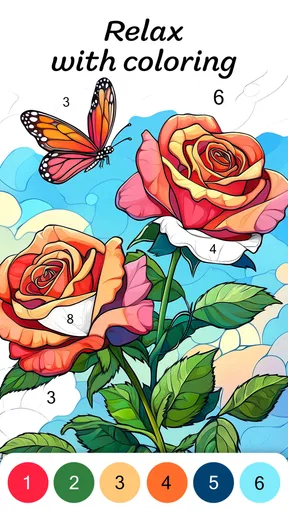
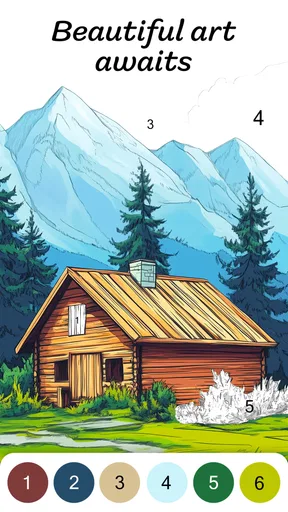
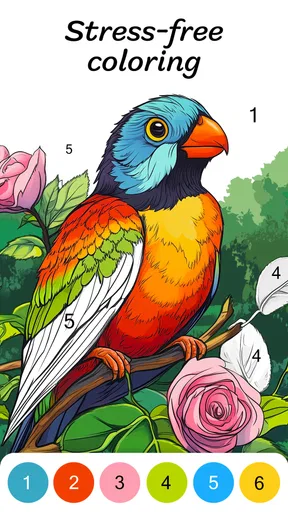
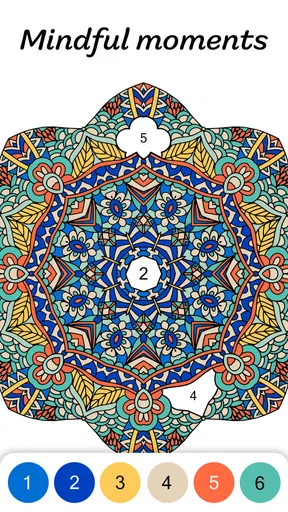
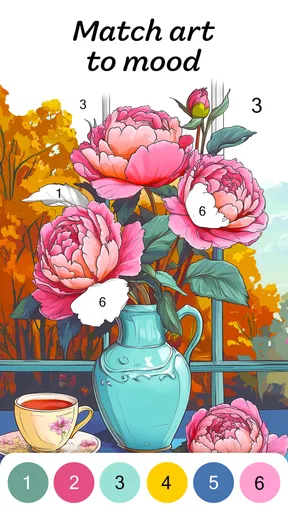
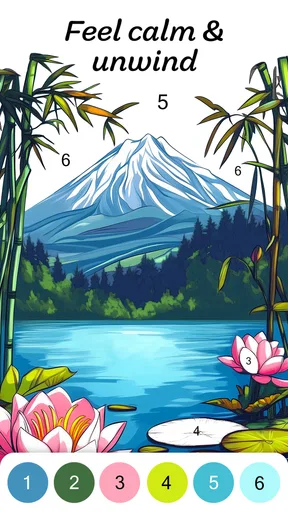
Our Review of Color by Number for Adults
 Analysis by Appyee
I approached Color by Number for Adults as a small daily escape rather than a serious art tool. That distinction matters. This is a free board game from Veraxen Ltd. built around filling numbered areas with matching colors, and its main appeal is the quiet rhythm of completing one section after another. I found it easiest to enjoy when I wanted something gentle to do with one hand while taking a break, not when I was looking for competition, creative drawing, or a deep puzzle system.
The game has a 4.3 average from around 24 thousand ratings, with more than 5 million installs. Those figures suggest that its straightforward format has found a broad audience. It is rated Teen, runs on Android 9 or later, and the current version is 3.5.0. The download itself is free, although optional purchases range from $0.99 to $149.99 per item, so I would check the purchase settings before handing the phone to a child or anyone who tends to tap quickly.
What I looked for before recommending it
For this kind of coloring game, I do not judge it by the same standard as a traditional board game. There is no need for a dramatic strategy layer or a large learning curve. I mainly ask whether the controls make small spaces easy to fill, whether the visual result feels rewarding, whether the pace works for short sessions, and whether the free experience remains comfortable without constant pressure to spend.
I also pay attention to the type of relaxation it offers. Number coloring is repetitive by design. That can be exactly what someone needs after work, but it can also feel monotonous if you want discovery or creative freedom. The important question is not whether the game is exciting in the usual sense. It is whether matching numbers to colors gives you a satisfying routine.
My first useful test was a short session during an ordinary break. I opened a picture, followed the numbered areas, and stopped before finishing. When I returned later, the unfinished image gave me a clear place to continue instead of making me remember a complicated objective. That makes the game suitable for fragmented time: a waiting room, a commute with a seat, or a few minutes before bed.
The basic loop is simple, but that is the point
The central action is easy to understand. A picture is divided into numbered sections, and each number corresponds to a color. I select the color and tap the matching areas. As the image fills, the remaining uncolored spaces become easier to spot, and the completed illustration provides the reward.
I like that the game does not ask me to invent a composition or choose a palette from scratch. That removes the pressure many people feel when opening a blank canvas. At the same time, it means the experience is guided rather than expressive. My finished picture reflects careful completion, not personal drawing skill.
The most comfortable way to play is to work by color rather than by location. I choose one color, scan the image for its numbered sections, and clear those areas before moving on. This reduces the constant switching that can make small coloring apps feel fiddly. For dense sections, zooming in first is more useful than tapping quickly and hoping the game catches the right spot.
A second practical habit is to finish the largest visible areas before chasing tiny fragments. Large sections establish the image quickly and make the remaining details less intimidating. When I leave very small spaces until the end, I can use a slower pace and check each tap instead of rushing through the picture.
Why the relaxing format works in everyday life
The strongest use case is a low-energy moment when I want an activity but do not want to make decisions. After a long day, choosing a complex game can feel like more work. Here, the next step is usually obvious: select the indicated color and fill the matching spaces. That predictable structure helped me settle into a calm rhythm without needing sound, competition, or a story to follow.
I can also see it working for someone who enjoys puzzles but does not want time limits. Unlike a conventional board game, there is no opponent waiting for a move and no group required to begin. Unlike a fast arcade game, the action does not punish a slow hand. That makes it friendlier for relaxed solo play, especially when concentration is available only in short bursts.
There is a useful psychological difference between coloring this way and simply watching a video. The screen is still passive in the sense that the artwork is already designed, but I am making small decisions and tracking progress. That light involvement can keep a break from becoming completely mindless.
Still, I would not call it universally calming. If you dislike repetitive tapping, the same structure may become tedious. People who relax through self-expression may prefer a blank drawing app, while anyone seeking social interaction will probably get more from a multiplayer board game. The game succeeds by keeping its demands low, not by offering endless variety in how you play.
Where this coloring game wins, and where another category may fit better
I find this game’s clearest strength is how little effort it takes to begin: a numbered picture gives me a next step without asking me to plan or compete. That makes it a handy choice for a brief, quiet break, while a drawing app or multiplayer board game is a better fit when I want creative control or company. The longer-term question is whether that guided routine stays pleasant once the novelty wears off.
Its clearest advantage over ordinary coloring apps
Compared with a freehand coloring app, this game removes the hardest creative decisions. I do not need to select brush sizes, mix colors, or worry about staying perfectly inside an outline. The numbered structure acts like a quiet guide. For a beginner or a tired user, that can be more inviting than an open-ended art workspace.
It also offers a stronger sense of completion than an empty canvas. Every correctly filled area moves the picture toward a defined result, so I can see progress even when I have only a few minutes. That is one reason I would recommend it to someone who likes checklists and small accomplishments but does not want a conventional productivity app.
There is a trade-off, though. Freehand coloring gives me ownership of the finished image. Here, the pleasure comes from revealing an existing design. If my goal is to practice illustration, experiment with unusual color combinations, or make something personal, this is the wrong category.
Its place beside traditional board games
As a board game, it is best understood in the broad digital sense rather than as a replacement for a tabletop session. A physical board game brings negotiation, tactics, shared laughter, and unpredictable reactions from other players. This title offers none of those social ingredients. What it does provide is immediate solo access and a much quieter pace.
I would choose this over a traditional board game when I am alone or when I only have a short window. I would choose the physical option when friends or family are available and the purpose is conversation. The two experiences solve different problems, so comparing them only by entertainment value misses the reason this one can be useful.
How it differs from competitive puzzle games
Competitive puzzle games reward speed, accuracy under pressure, or high scores. That can be motivating, but it can also turn a break into another performance task. Color by Number for Adults is better suited to users who want progress without the feeling of losing.
The downside is that a player who needs challenge may run out of motivation. There is no reason for me to improve a time, outsmart an opponent, or master a difficult rule set. The satisfaction comes from completion and visual transformation. If those rewards feel too soft, a logic puzzle, strategy board game, or competitive title will probably hold attention longer.
When the free model deserves a closer look
The free entry point makes it easy to try the core experience without committing money first. That is important for this genre because the format is highly personal: some people find number coloring soothing immediately, while others know within minutes that the repetition is not for them.
Optional purchases are part of the decision, and the listed range stretches from small amounts to much larger individual items. I would not assume that every player needs to buy anything, but I would treat the purchase system as a reason to set a budget rather than tapping casually. The safest workflow for me is to try the free experience over several short sessions, decide whether I genuinely return to it, and only then consider spending.
This is also where the Teen content rating matters. It does not make the game unsuitable for every younger player, but I would still rely on the rating and supervise purchases rather than treating a coloring game as automatically intended for children.
Small techniques that make the experience smoother
One overlooked issue in number-coloring games is visual clutter. When many shades and tiny spaces appear together, I find it more efficient to reduce the number of active decisions. I work through one color family at a time, then pause to inspect the image before selecting another. This keeps me from repeatedly tapping a section that belongs to a nearby shade.
I also avoid trying to complete a detailed image in one sitting. Stopping after a recognizable portion is finished gives the next session a pleasant starting point. It is a better fit for relaxation than turning the game into a task I must finish before putting the phone down.
For users with limited patience, I suggest choosing pictures that show visible progress quickly. A highly detailed image may look attractive but demand more careful tapping. A simpler design can deliver the same calming loop with less friction. That is a meaningful trade-off: detail can make the final result richer, while simplicity makes the route there easier.
Another practical point is hand position. I play with the phone held securely and use deliberate taps near the center of each area. Fast swiping feels natural in many mobile games, but it is not the best habit here because the activity depends on precise selection. Slowing down actually makes the session feel more restful.
Who should choose it, and who should skip it
I would recommend it to adults who enjoy visual progress, guided creative activities, and quiet solo sessions. It is especially suitable for someone who wants a low-pressure alternative to competitive games or a simple activity for breaks. People who find repetitive patterns soothing may appreciate it more than users who need constant novelty.
I would be cautious about recommending it to anyone looking for genuine artistic control. It is not a drawing studio, a social board game, or a strategy challenge. It may also disappoint players who expect every board-game label to involve rules, turns, or tactical choices.
It is a poor fit if optional purchases make you uncomfortable, particularly when you prefer apps with a completely predictable cost. The free starting point is helpful, but the presence of in-app items means I would make the spending decision consciously rather than assuming the entire experience follows a one-time purchase model.
What the long-term decision comes down to
The main cost of switching from another relaxing app is not learning the controls; it is adjusting your expectations. If you move from a freehand coloring tool, you give up creative control in exchange for easier completion. If you move from a puzzle game, you give up challenge in exchange for a gentler pace. If you move from a traditional board game, you give up social play in exchange for immediate solo access.
That exchange is worthwhile when your priority is a calm, guided routine. It is not worthwhile when the feature you value most is originality, competition, or interaction with other people. I would make the decision based on the kind of attention I want to spend, not simply on whether I like coloring.
Veraxen Ltd. has positioned the game in a familiar but effective space: take a picture, match the numbers, and watch it become complete. The format is accessible enough for a first try, yet the best results come from using a patient workflow instead of treating every tap as a race. Those small habits make the experience feel more polished in practice than the short description alone suggests.
My recommendation after using it
I recommend Color by Number for Adults as a free trial for anyone who wants a quiet, structured pastime on Android 9 or later. I would begin with short sessions, use one color at a time, and decide after several returns whether the repetition feels restorative or merely slow. That approach tells me more than a single long session because the real value is whether I want to open it during ordinary breaks.
My honest verdict is that this is a relaxation-first board game, not an all-purpose art or puzzle app. It wins through simplicity, clear visual progress, and the ability to fit around an unpredictable day. Its limitations are equally clear: limited creative ownership, little competitive depth, and optional purchases that deserve attention.
If those boundaries match what you want, the free download is an easy recommendation. I would keep it on my phone for evenings when I want to do something with my hands without taking on another demanding game. If you need social play, strategic decisions, or a blank canvas, I would choose a different category instead. For the right player, though, the gentle act of turning numbered spaces into a finished picture is more satisfying than its simple rules suggest.
Verdict
Strengths of Color by Number for Adults
- Relaxing activity that helps reduce stress and encourages mindful focus.
- Large selection of themed coloring pages for different interests.
- Simple tap-to-color controls are easy for beginners to learn.
- Works well for short sessions or longer creative breaks.
- Finished artwork can usually be saved and shared with others.
Limitations of Color by Number for Adults
- Some advanced pictures or categories may require in-app purchases.
- Frequent ads can interrupt coloring, especially in the free version.
- Small numbered areas may be difficult to select on compact screens.
- Limited creative freedom compared with traditional coloring apps.
- Some features may require an internet connection to load new content.
Similar Picks in This Category
View All
Ludo King®
Gametion4.1

Ludo
Yarsa Games4.6

Tile Master® - Matching Game
Higgs Studio3.6

Checkers Online
CC Games4.6

Dominoes
Loop Games4.7

Chess
Chess Prince4.6
Frequently Asked Questions
What is Color by Number for Adults?
Color by Number for Adults is a digital coloring app designed around numbered illustrations. Each image is divided into sections, and every section corresponds to a specific color. After selecting a palette color, you tap the matching areas to complete the picture. The app typically includes categories such as animals, flowers, landscapes, mandalas, fantasy art, and relaxing patterns, making it suitable for casual creative sessions.
Is Color by Number for Adults free to download and use?
The app can usually be downloaded for free, but the available content and features may vary depending on the version. Some pictures, color palettes, tools, or premium collections can require in-app purchases or a subscription. Advertisements may also appear during use. Before downloading, it is worth checking the store listing for current pricing, trial conditions, renewal details, and whether optional purchases are clearly identified.
Does Color by Number for Adults work without an internet connection?
Some parts of the app may work offline, especially coloring images that have already been downloaded or included with the initial installation. However, an internet connection may be required to load new artwork, display advertisements, synchronize progress, access cloud features, or restore purchases. Offline availability can differ between Android and iOS versions, so users should test the app after downloading the desired pictures.
Is Color by Number for Adults suitable for beginners and children?
The basic tap-to-color controls are simple enough for beginners, and adults can use the app without previous drawing experience. Nevertheless, the content, advertising, purchase options, and privacy settings should be reviewed before allowing children to use it. Although many pictures are family-friendly, the app is primarily presented as an adult relaxation and coloring experience rather than a dedicated educational children’s application.
What features should I expect while coloring?
Color by Number for Adults generally provides numbered artwork, color palettes, zoom controls, hints, progress tracking, and tools that make small sections easier to fill. Completed pictures can often be saved or shared as images. The exact tools depend on the app version, and unlimited hints, special effects, or exclusive galleries may be restricted to premium users. It is also common for free users to encounter advertisements between activities.
Play our best games!


